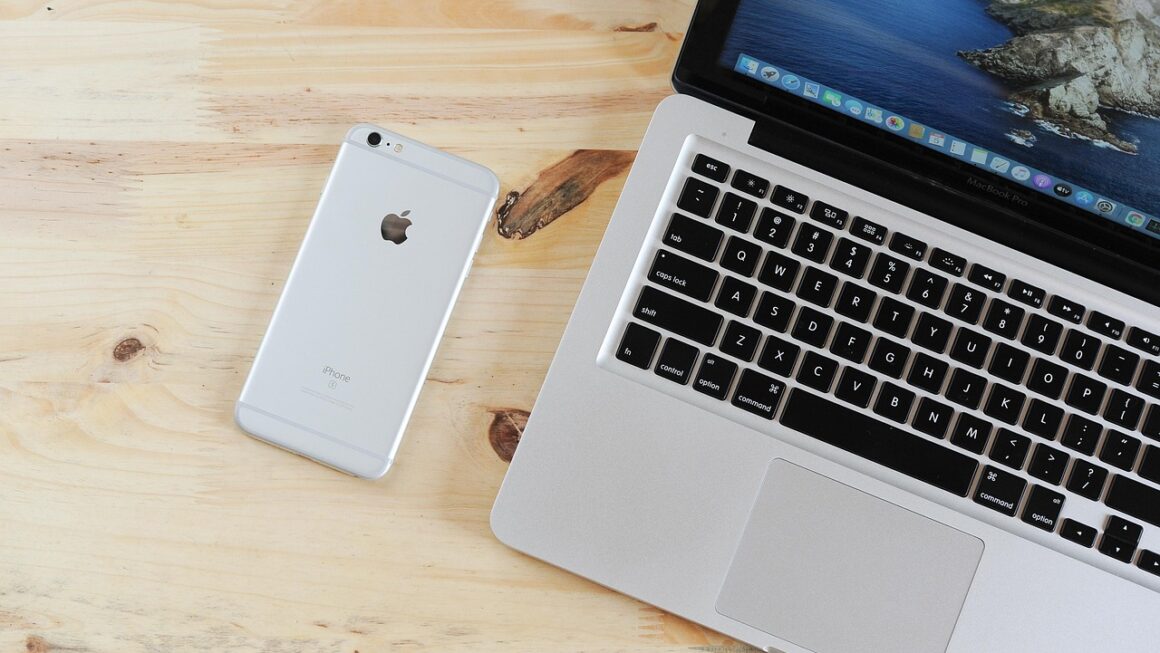
Choosing the right laptop can feel like navigating a complex maze, especially with the ever-expanding array of options available. Whether you’re a student, a creative professional, a gamer, or simply need a reliable device for everyday tasks, understanding the key features, specifications, and trade-offs is crucial. This guide will break down the essential aspects of laptops, helping you make an informed decision that perfectly fits your needs and budget.
Understanding Laptop Types
Choosing the right type of laptop is the first step in your buying journey. Different categories cater to different needs, so understanding the distinctions is key.
Ultrabooks
- Definition: Thin, light, and designed for portability and long battery life.
- Ideal For: Professionals, students, and anyone who needs a laptop for travel or working on the go.
- Example: Dell XPS 13, MacBook Air. These typically prioritize battery life and portability over raw processing power, making them great for everyday tasks and productivity.
- Key Features:
Lightweight design (typically under 3 lbs)
Long battery life (often 8+ hours)
Solid-state drives (SSDs) for fast boot times
Integrated graphics
- Actionable Takeaway: If portability and battery life are your top priorities, an ultrabook is an excellent choice.
2-in-1 Laptops (Convertibles)
- Definition: Laptops that can be used in multiple modes – as a traditional laptop, a tablet, or in a stand/tent mode.
- Ideal For: Users who want the flexibility of both a laptop and a tablet.
- Example: Microsoft Surface Pro, Lenovo Yoga series. These often come with touchscreens and stylus support, making them ideal for creative tasks like drawing or note-taking.
- Key Features:
360-degree hinge or detachable keyboard
Touchscreen displays
Stylus support (often optional)
Versatile usage modes
- Actionable Takeaway: If you value versatility and enjoy using a tablet, a 2-in-1 laptop is worth considering.
Gaming Laptops
- Definition: High-performance laptops designed for gaming.
- Ideal For: Gamers who want to play demanding games on the go.
- Example: ASUS ROG Zephyrus, Razer Blade, Alienware m series. These laptops are typically larger and heavier than other types due to the powerful components they house.
- Key Features:
Powerful dedicated graphics cards (NVIDIA GeForce RTX or AMD Radeon RX series)
High refresh rate displays (120Hz, 144Hz, or higher)
Advanced cooling systems
Fast processors (Intel Core i7 or i9, AMD Ryzen 7 or 9)
- Actionable Takeaway: If you’re a serious gamer, invest in a gaming laptop with a dedicated graphics card and a high refresh rate display.
Budget Laptops
- Definition: Affordable laptops designed for basic tasks.
- Ideal For: Students, casual users, and anyone on a tight budget.
- Example: Acer Aspire series, HP Chromebooks, Lenovo IdeaPad series.
- Key Features:
Lower-end processors (Intel Celeron, Pentium, or AMD Athlon)
Limited RAM and storage (often 4GB RAM and 128GB SSD)
Basic displays
Durable build quality (sometimes)
- Actionable Takeaway: If you only need a laptop for basic tasks like web browsing and word processing, a budget laptop can be a cost-effective option.
Key Laptop Specifications
Understanding laptop specifications is crucial for choosing the right device. This section breaks down the key components and their importance.
Processor (CPU)
- Importance: The CPU is the brain of your laptop, responsible for executing instructions and performing calculations.
- Options: Intel Core i3, i5, i7, i9; AMD Ryzen 3, 5, 7, 9; Apple M1, M2, M3 series.
- Practical Example: An Intel Core i5 or AMD Ryzen 5 processor is sufficient for most everyday tasks, while an Intel Core i7 or AMD Ryzen 7 is recommended for more demanding tasks like video editing or gaming.
- Tip: Pay attention to the generation of the processor (e.g., 13th Gen Intel Core i7) as newer generations typically offer improved performance and efficiency.
Memory (RAM)
- Importance: RAM (Random Access Memory) is used to store data that the CPU is actively using. More RAM allows you to run more applications simultaneously without slowing down your laptop.
- Recommendation: 8GB of RAM is the minimum for most users, while 16GB is recommended for demanding tasks like video editing or gaming.
- Tip: Consider laptops with upgradable RAM slots so you can increase the memory in the future if needed.
Storage (SSD vs. HDD)
- SSD (Solid State Drive): Offers faster boot times, application loading, and overall performance compared to HDDs.
- HDD (Hard Disk Drive): Slower and less durable than SSDs but offers more storage capacity for the same price.
- Recommendation: Prioritize SSD storage for the operating system and frequently used applications. A combination of SSD and HDD can be a good compromise between speed and storage capacity. A 256GB SSD is generally a good starting point.
- Tip: Cloud storage services can supplement your laptop’s storage if needed.
Graphics Card (GPU)
- Integrated Graphics: Built into the CPU, suitable for basic tasks and light gaming.
- Dedicated Graphics: Separate graphics card with its own memory, required for demanding games and graphics-intensive applications.
- Options: NVIDIA GeForce RTX series, AMD Radeon RX series.
- Practical Example: A dedicated graphics card like an NVIDIA GeForce RTX 3050 or AMD Radeon RX 6600M is recommended for gaming at 1080p resolution.
Display
- Resolution: Higher resolution displays (e.g., 1920×1080 (Full HD), 2560×1440 (QHD), 3840×2160 (4K)) offer sharper images and more screen real estate.
- Panel Type: IPS panels offer better color accuracy and viewing angles compared to TN panels.
- Refresh Rate: Higher refresh rates (e.g., 120Hz, 144Hz) provide smoother motion, especially important for gaming.
- Practical Example: A Full HD (1920×1080) IPS display is a good choice for most users, while a QHD or 4K display is recommended for professionals who work with images or videos.
Operating System (OS)
The operating system is the core software that manages your laptop’s hardware and software resources. Choosing the right OS depends on your preferences, needs, and the software you plan to use.
Windows
- Pros: Wide software compatibility, extensive hardware support, customizable, good for gaming.
- Cons: Can be resource-intensive, susceptible to malware, requires regular maintenance.
- Example: Windows 11 is the latest version of Windows, offering a modern interface and improved performance.
- Target Audience: Users who need compatibility with a wide range of software, including legacy applications and games.
macOS
- Pros: User-friendly interface, excellent security, optimized for creative tasks, seamless integration with Apple devices.
- Cons: Limited hardware options, less gaming support, higher price point.
- Example: macOS Ventura is the latest version of macOS, offering features like Stage Manager and Continuity Camera.
- Target Audience: Creative professionals, users who value ease of use and security, and those already invested in the Apple ecosystem.
ChromeOS
- Pros: Lightweight, fast, secure, affordable, good for web browsing and cloud-based applications.
- Cons: Limited offline functionality, less software compatibility, not suitable for demanding tasks.
- Example: ChromeOS is designed to run primarily web-based applications, making it ideal for students and casual users.
- Target Audience: Students, casual users, and anyone who primarily uses their laptop for web browsing, email, and cloud-based productivity tasks.
Linux
- Pros: Highly customizable, open-source, secure, lightweight, suitable for developers and advanced users.
- Cons: Steeper learning curve, limited software compatibility, requires technical knowledge.
- Example: Ubuntu is a popular Linux distribution known for its ease of use and wide software availability.
- Target Audience: Developers, system administrators, and advanced users who want full control over their operating system.
Connectivity and Ports
Ensuring your laptop has the right connectivity options and ports is crucial for connecting to peripherals, external displays, and networks.
USB Ports
- USB Type-A: The traditional USB port, still widely used for connecting older devices.
- USB Type-C: A versatile port that supports data transfer, charging, and video output. Look for USB-C ports with Thunderbolt support for faster data transfer speeds and the ability to connect multiple displays.
- Recommendation: Prioritize laptops with multiple USB Type-C ports, including at least one with Thunderbolt support.
HDMI Port
- Importance: Allows you to connect your laptop to an external display, such as a monitor or TV.
- Recommendation: Ensure your laptop has an HDMI port if you plan to use it with an external display.
Headphone Jack
- Importance: For connecting headphones or external speakers.
- Recommendation: While some laptops are eliminating the headphone jack, it’s still a useful feature for many users.
Wireless Connectivity
- Wi-Fi: Essential for connecting to wireless networks. Look for laptops that support the latest Wi-Fi standards (e.g., Wi-Fi 6 or Wi-Fi 6E) for faster and more reliable connections.
- Bluetooth: For connecting wireless peripherals like mice, keyboards, and headphones.
- Recommendation: Ensure your laptop supports Bluetooth 5.0 or later for improved range and performance.
SD Card Reader
- Importance: For transferring photos and videos from cameras or other devices.
- Recommendation: Useful for photographers, videographers, and anyone who frequently works with SD cards.
Conclusion
Choosing the right laptop is a significant decision that depends heavily on your individual needs and priorities. By understanding the different types of laptops, key specifications, operating systems, and connectivity options, you can make an informed choice that will serve you well for years to come. Remember to carefully consider your budget, usage scenarios, and desired features before making a purchase. Happy laptop hunting!